Planting native plants for pollinators brings a host of benefits: it improves soil health and prevents erosion, supports local wildlife with food and shelter, offers unique beauty, thrives in your local climate with less water and fewer chemicals, and helps your neighborhood's ecology stay resilient to a changing climate — all while needing less maintenance than a typical bed.
Your planting area
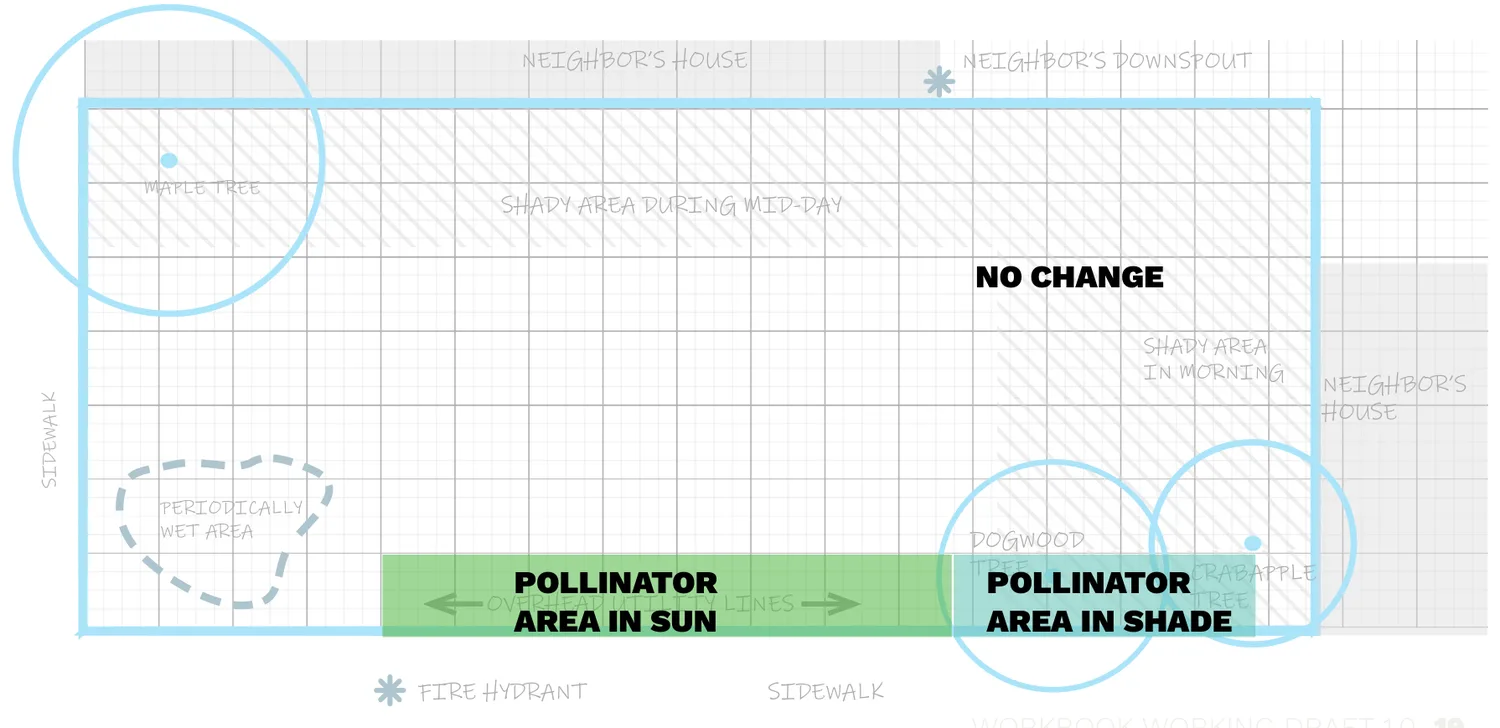
Assess the area you want to plant using your Base Plan from Assess, or — if you don't have one — estimate the square footage you want to dedicate to planting.
Choose a planting palette
Whether you're dreaming of a cozy corner of grasses and wildflowers, or a lush space with shrubs and trees, pick the palette that best suits you and your site. (The dotted line in each example shows 6 feet, or eye level — useful if you want to block a view or keep it open.)
Grasses & wildflowers
- Unobstructed views — generally under 3 feet tall, so sightlines stay open.
- A water-wise alternative to lawn: less water, fertilizer and mowing.
- A pollinator buffet of pollen, nectar and seeds.
- Thrives in full sun.
- Season-long color.
Grasses, wildflowers + shrubs
- Screens unsightly views.
- More shelter and five-star dining for pollinators.
- Adds structure and a bit more height — most shrubs stay under 4 feet.
- Lower-maintenance than grasses and wildflowers alone; a light pruning in year 3–4 keeps things tidy.
Grasses, wildflowers, shrubs + trees
- Creates a full-on habitat and a cozy home for wildlife.
- Amps up the planting's overall resilience.
- A lively, year-round private sanctuary.
Grasses, wildflowers + trees
- Native trees bring local elegance suited to your region.
- Better air quality — trees absorb pollutants and release oxygen.
- Habitat and food for local wildlife.
- Carbon sequestration.
- A little shade with a planted carpet underneath, while keeping visibility across the whole site open.
⬇ Pollinator patch plant listOne spreadsheet, a tab per palette — make your own copy to edit it
General planting notes
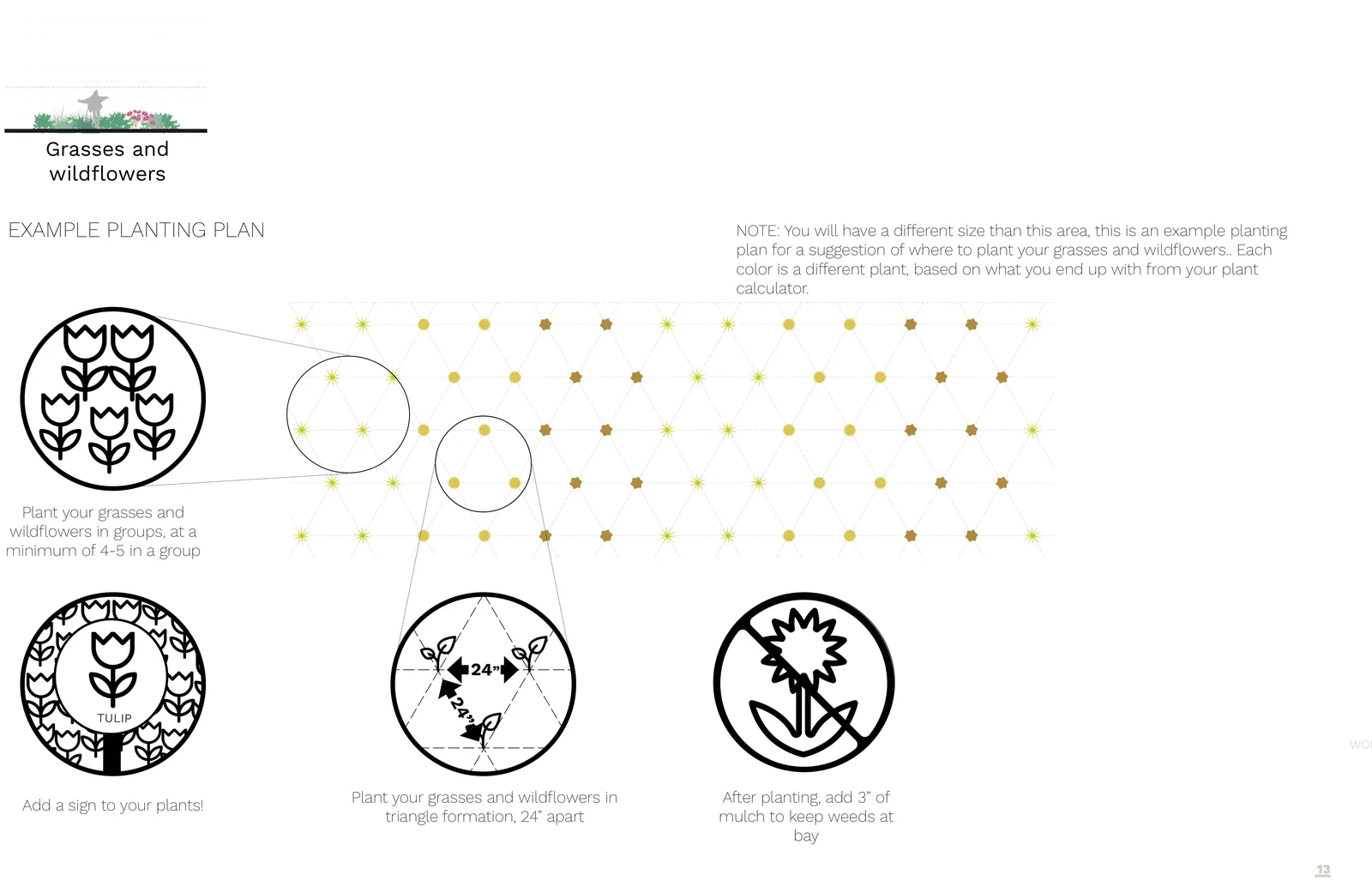
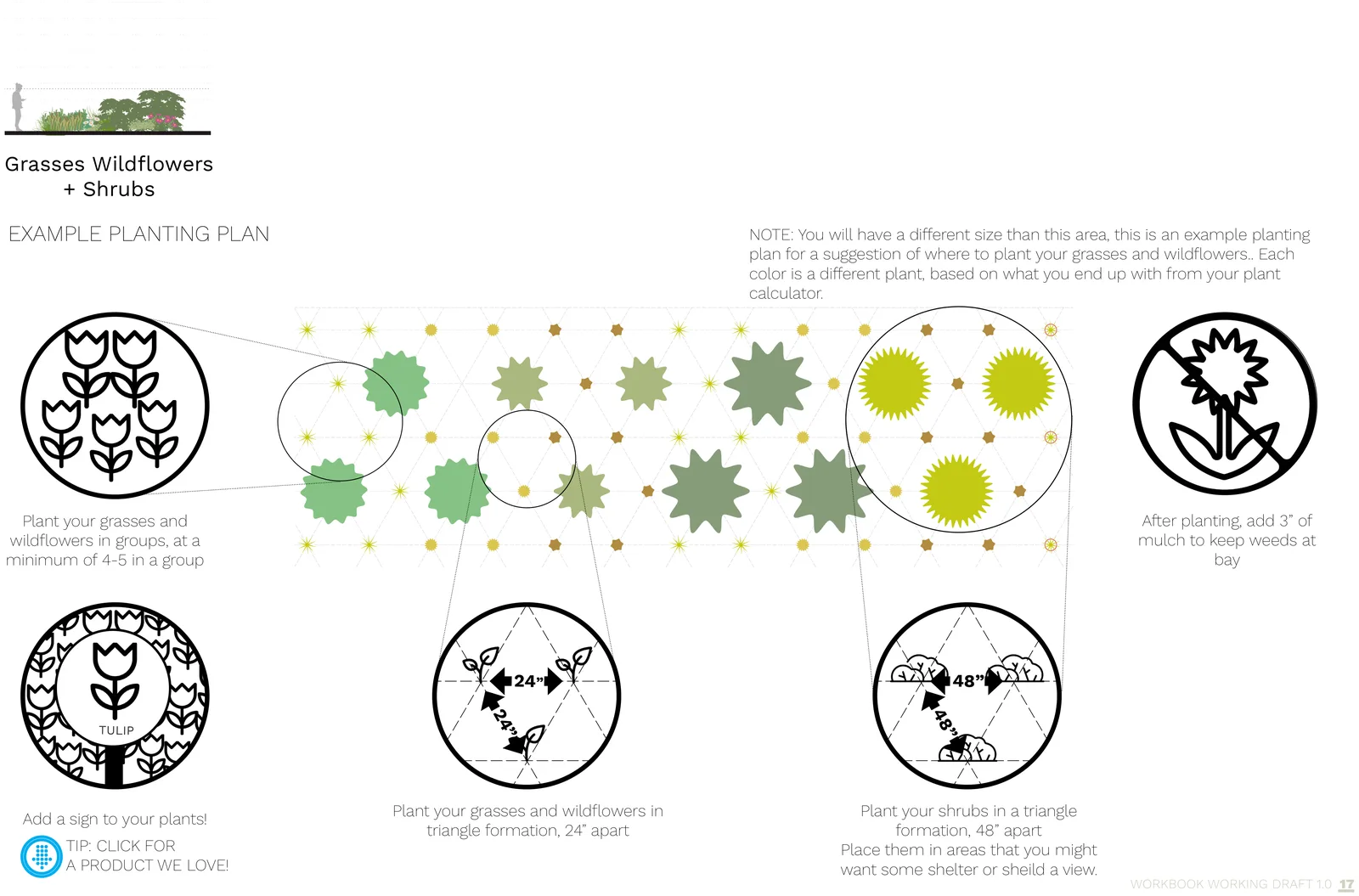
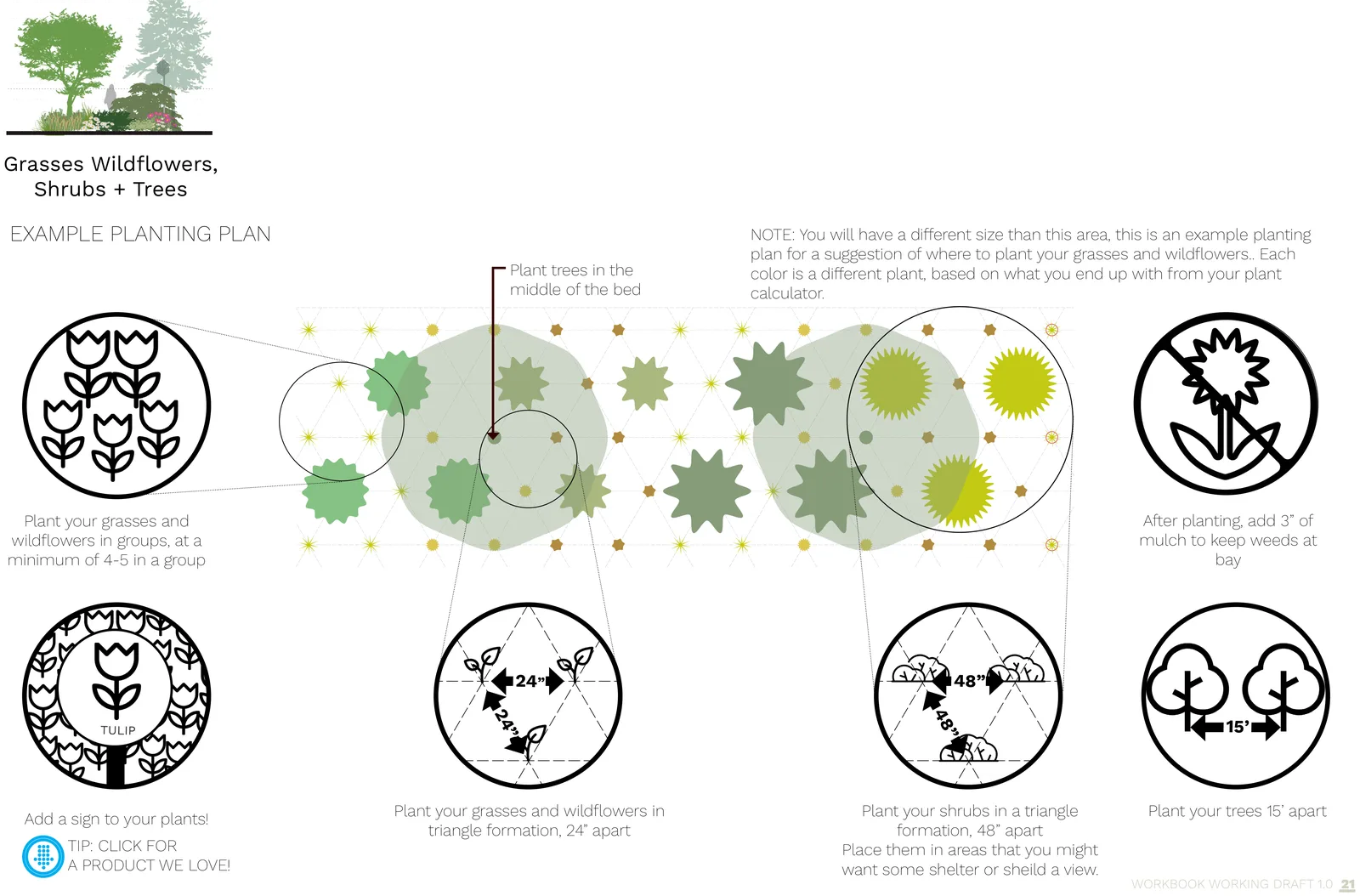
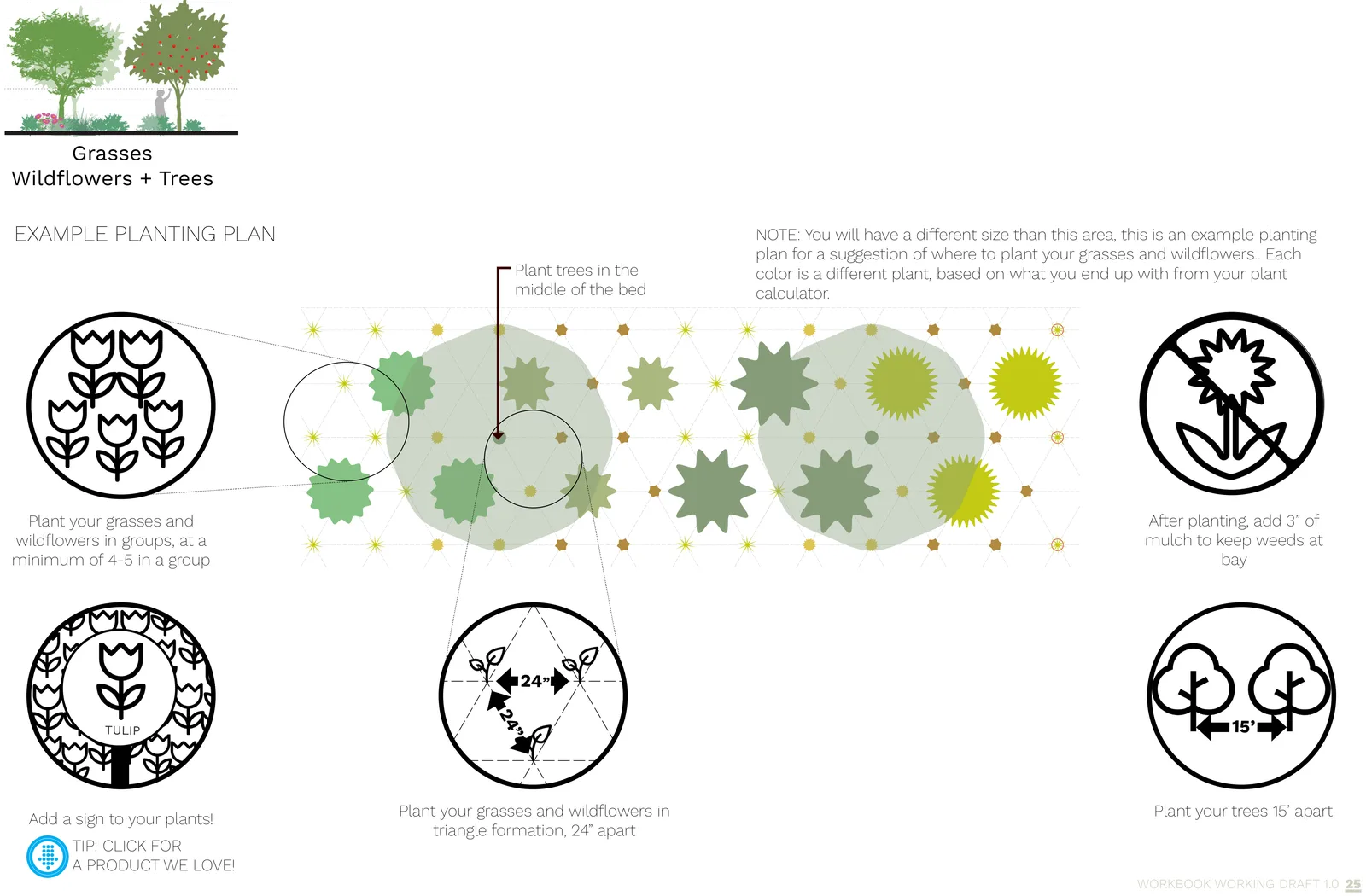
- Plant your grasses and wildflowers in groups, at a minimum of 4–5 in a group, in a triangle formation 24" apart.
- Plant shrubs in a triangle formation 48" apart, in areas where you might want some shelter or to shield a view.
- Plant trees in the middle of the bed, 15' apart.
- After planting, add 3" of mulch to keep weeds at bay.
- Add a sign to your plants so neighbors know what's growing (and what's a weed).
Maintenance
First season
- Water thoroughly: provide 1" of water weekly during the first season.
- Weed identification: mark undesirable weeds with sticks and remove them.
Second season and on
Are you ready?
Congratulations for completing the Planting workbook! Check off each step below.