Park in a Truck parks strive to be an urban oasis filled with plants and trees that nourish everyone who visits them — including the birds, bees, butterflies, bats and other pollinators the plants depend on. Like a baby, your park needs lots of love and attention in its first few years of life in order to survive, thrive, and become social!
This step is broken into three categories, each best coordinated by one person:
- Survive — the only critical category. Weekly watering and weeding for the first two years. If no one in the community can take this on, you’ll need to hire someone for the park’s infancy.
- Thrive — optional extra effort: annuals, bulbs, and starting an edible garden from seed.
- Socialize — entirely up to you: the events and meetings that turn your park into a gathering place.
📄 Original workbook page (PDF page 3)
Water & weed every week
Watering. Water your plants weekly for the first two years. Pay attention to see if they need more or less:
- If the top 2 inches of soil are dry, it’s time to water.
- If plants are visibly wilting, it’s time to water.
- Use a rainwater guide to track how much water your plants are getting.
If you need to water, thoroughly soak the planting area — either run water for 3 hours using a soaker hose, or water by hand, slowly enough that it doesn’t run off, long enough to penetrate 6–8 inches into the soil.
Weeding. Weeding must be done weekly from April 15th to October, for at least the first two years.
- Use a pre-emergent on your beds to control weeds (see seasonal cleanup, below).
- Instead of pulling weeds, try spraying them with a solution of 20% vinegar. If you’re having trouble, consult your local nursery.
- Consult online weed resources or an app like PlantSnap to identify plants and weeds.
Monthly care & seasonal cleanup
Once a month, walk the park and check for the following:
Mulching
Mulch all planting beds with leaf mold or mature, triple-shredded hardwood mulch, and maintain it at a depth of 2 to 3 inches — being careful not to over-mulch. Be especially careful mulching around trees: the wrong way is to push mulch up onto the trunk like a mountain slope; the correct way is a flat donut, with an inch or more of open space between the mulch and the trunk. Mulch left touching the trunk can rot the bark and expose the tree to insect damage, disease and possible death.
Pruning
Use hand-pruning tools for all shrub pruning — don’t use power trimmers. Prune shrubs and trees only as necessary to guide future structural shape, or to remove dead or diseased material. Prune and trim branches to maintain a minimum head clearance of 7 feet along walks and 13 feet over roads and driveways.
Pest control
The park is designed to attract pollinators who help with pest control. Sometimes human intervention is still needed — if you see something strange on your plants, investigate: take photos, research online, and/or contact your local nursery.
Seasonal cleanup
Grow more: seeds, bulbs & annuals
If you’re willing to put in a little extra effort, here’s how to make your park really thrive. Annuals give you showy flowers that bloom all season but don’t return the next year. Bulbs, like tulips and daffodils, typically come back every year and add early-season color. Starting a vegetable garden from seed indoors is a cost-effective way to grow exactly what you want.
Seeds. Read seed catalogs to decide what to grow and how to care for it. Order seeds for veggies and annuals. Start your seeds indoors for an edible garden, then transfer to planters once the weather warms.
Bulbs. Order bulbs and store them in a cool, dry space. Plant bulbs between Halloween and Thanksgiving. Fertilize 4–6 weeks before the anticipated bloom. Deadhead flowers after bloom (remove the spent flower heads). Wait for the foliage to turn yellow, then remove the entire plant.
Annuals. Buy your desired annual flowers. Plant in April if spring is warm, or June if it’s cool. Keep well watered, and monitor for pests — remove infested foliage if needed.
Your annual workplan
The guidelines above are a framework for the ongoing seasonal maintenance of your park — these are the tasks you need to complete, by month, season and year. Check them off as you go; the most important things are simply to weed and water.
Park Ambassador program
We highly recommend the Park Ambassador program, which hires local youth to help maintain and program the park. Park Ambassadors:
- Create a safe, clean and accessible park for everyone.
- Plan fun activities for community residents of all ages.
- Keep the park clean and neat.
- Make sure the park is a welcoming green oasis.
We’ve developed a Park Ambassador Guidebook — a step-by-step curriculum and resource guide to help Park Ambassadors maintain and program the new park, and a place to record what happens there. The ambassador youth work closely with a community member, who acts as their mentor and guide through the whole process.
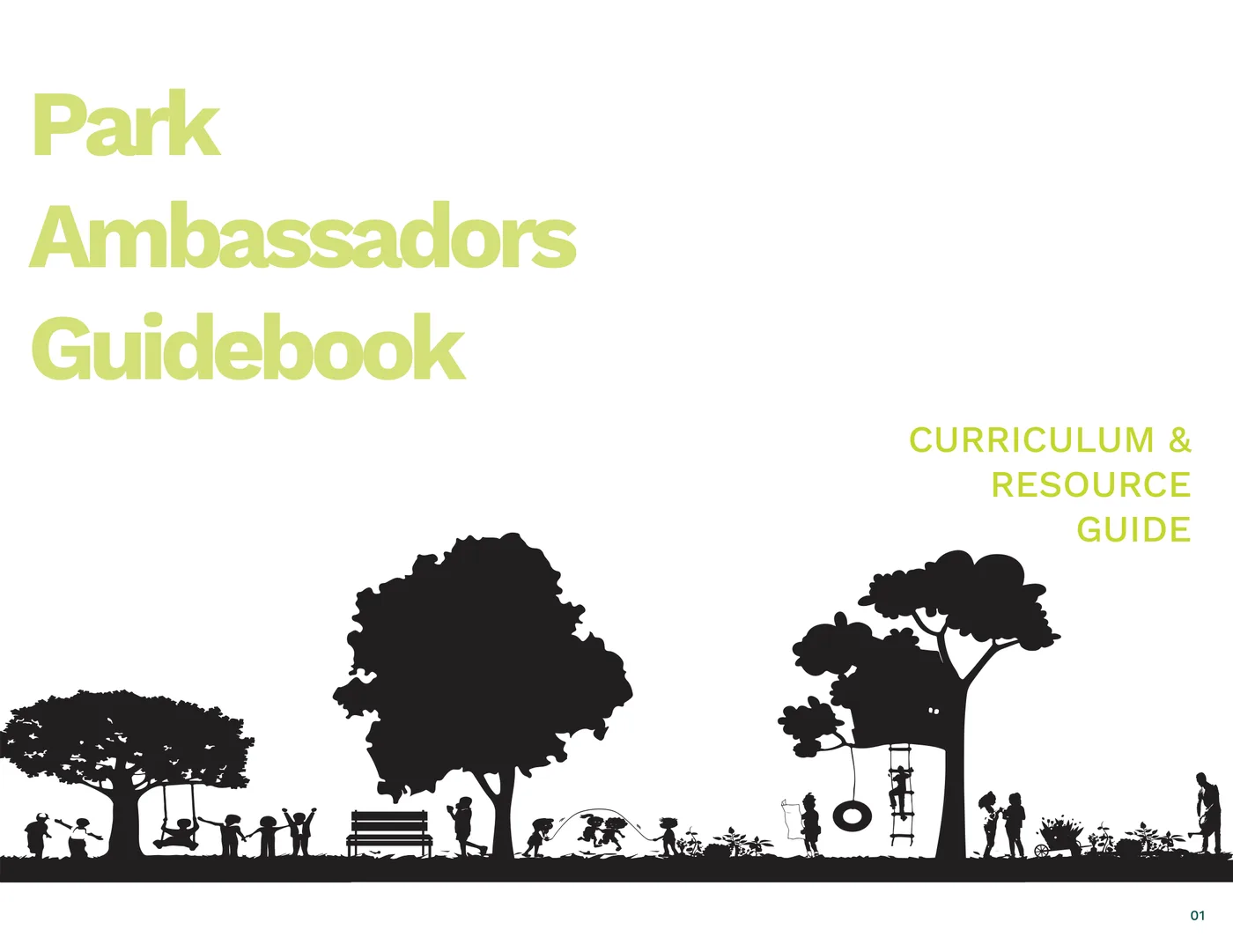
⬇ Park Ambassador Guidebook (PDF)Curriculum & resource guide
Helpful links
- General plant info — PHS Gold Medal Plants ↗ · Gardens Alive ↗ · North Creek Nurseries ↗ · Missouri Botanical Garden plant finder ↗ · Longwood Gardens plant explorer ↗ (link currently dead) · Arbor Day Foundation ↗ · Penn State planting guide ↗
- Workshops & lot help — Pennsylvania Horticultural Society ↗ · Grounded in Philly ↗ (legal help, lot data, insurance, compost) · Greensgrow ↗ (link currently dead) (educational urban farm)
- Invasive plants — Brandywine Conservancy ↗
- Tree, shrub & perennial care — Containerized tree planting ↗ · How to plant a tree ↗ · How to plant a shrub ↗ · How to prune a shrub ↗
- Fruit trees — Arbor Day Foundation fruit care ↗ · Philadelphia Orchard Project ↗
- Soil, composting & fertilizing — Penn State soil testing ↗ · Composting basics ↗ · Penn State: promoting plant health ↗ · How to mulch your garden ↗

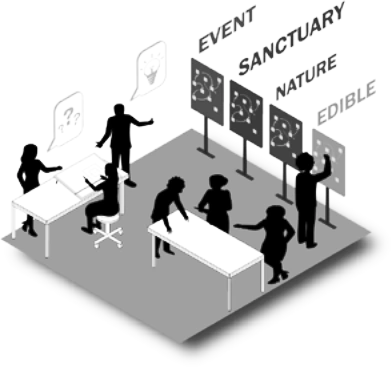
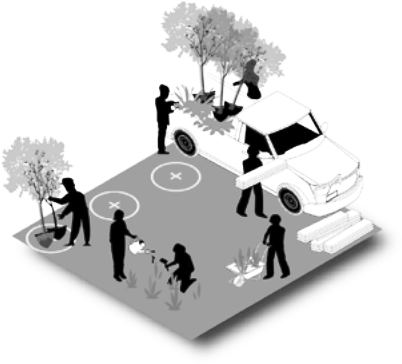
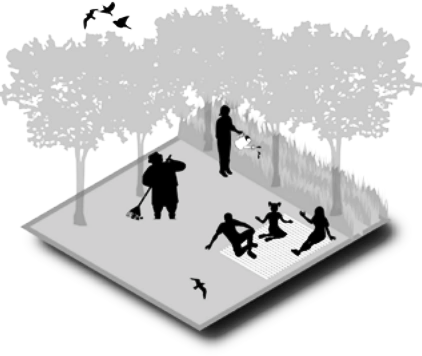
Socialize
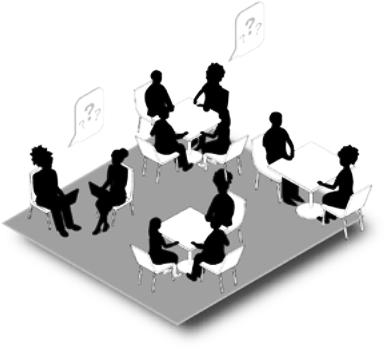
This piece is entirely up to you. Instead of a detailed calendar to follow, you get to decide which activities to offer! A few ideas from other Park in a Truck parks: a bird-watching event, an Earth Day celebration, a summer nature camp, a ribbon cutting, a community clean-up, or a seasonal park information meeting.
📄 Original workbook page (PDF page 7)