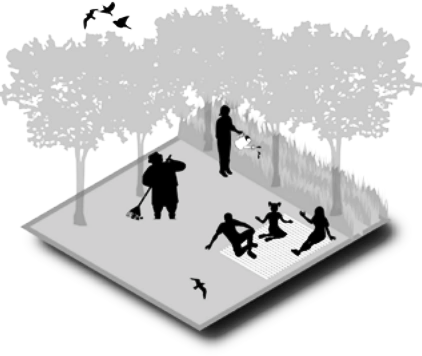
Park creators who don’t already have legal access to vacant land must find others willing to sell or lease their lot(s) for the proposed park. This effort can be complicated and time consuming. There is no such thing as a perfect process, no one way to proceed, and no guaranteed outcome. This step will help you find a way to acquire your future park site.
Find a lot
Large urban parks provide many social, ecological, and economic benefits to a city’s residents and visitors. But unless the park is easy to get to, they may only be visited occasionally. Not everyone has access to a car or convenient public transportation, or can walk or bike long distances.
This is why it’s important to find a nearby lot or space to turn into a small neighborhood park. They have many of the benefits of the big park and their proximity allows for easy access. The more a neighborhood park is visited, the more familiar — and valued — the park becomes. Active park use helps these spaces become an essential hub of “social life” that builds a neighborhood’s sense of community!
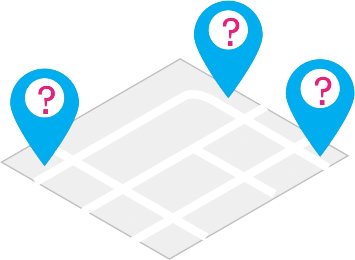
Are there unused properties in your neighborhood that are legally available, safe, and suitable for park use? Can you identify potential lots in your neighborhood where you’d like to see your park?
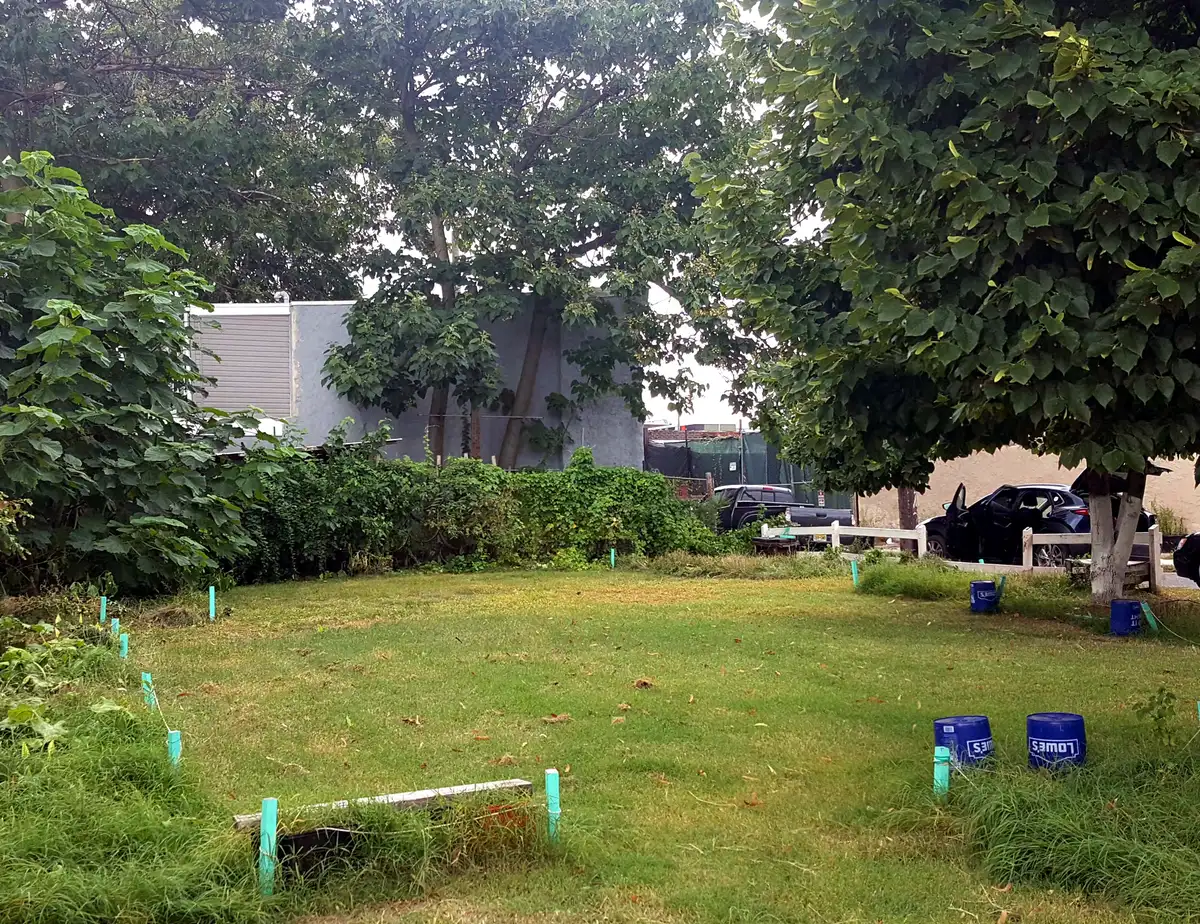
Which lot?
Review the three different types of potential neighborhood park locations. Walk your neighborhood and note which underutilized properties are possible locations for your park.
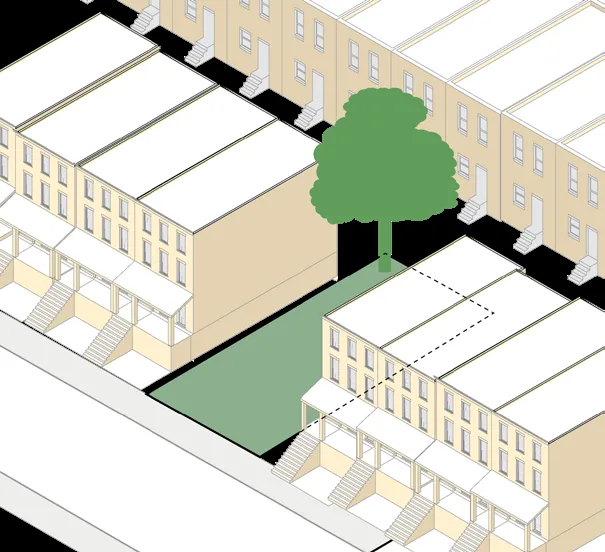
Mid-block lot (vacant lot). Rectangular in shape and found in the middle of a residential block. May have buildings on each side and/or the end. The highest number of available “vacant” lots in Philadelphia are this category. May have limitations for some park uses due to narrow width and/or lack of sunlight.
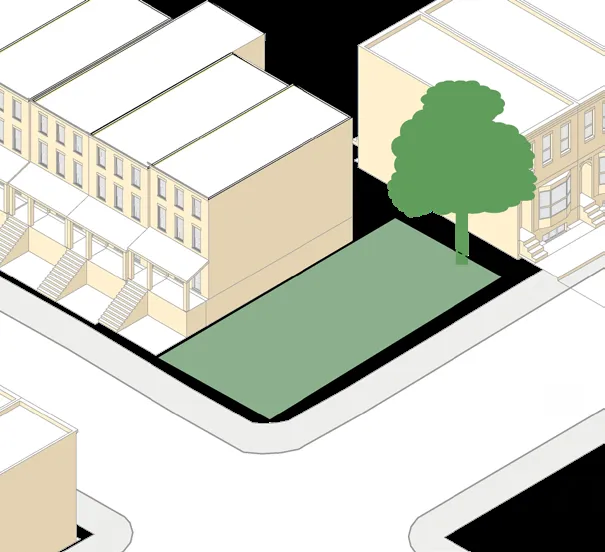
Corner lot (vacant lot). Rectangular in shape and found at the end of a residential block. May have buildings on the side and/or end. These lots offer high visibility and often have the most sunlight.
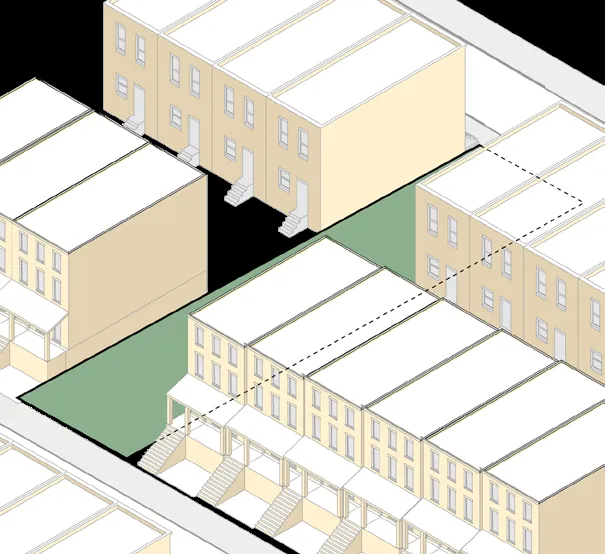
Breezeway / alley (easement). Identifiable by their long and very narrow shape, these locations often connect “across” a block. Originally set aside for pedestrian connections between streets and/or utility easements.
Record the address of each possible lot. When you look an address up, the site fills in the owner, size and lot type for you.
Who owns that lot?
Once you have identified some potential underutilized properties for your new neighborhood park, the next step is to determine who owns the property. The owner could be an individual, business, or non-profit organization. The owner could also be the City. The most reliable way to see who owns a lot is to check the City of Philadelphia records.
This flowchart shows how to determine who owns a lot and the possible steps to acquire the legal rights — or “entitlements” — to use the property as a neighborhood park.
- 1Determine address. Verify the street address of the potential lot or lots you wrote down.
- 2Search property. Go to atlas.phila.gov and enter the street address. You can also find the lot by zooming into a nearby street on the map.
- 3Determine owner. View the owner of the property under the “Property Assessment” section on the website.
4a. Owner is… City of Philadelphia (public ownership)
Potential purchase. Do a property search to find out if public land is available for purchase through the Philadelphia Housing Development Corporation (PHDC) and the Philadelphia Land Bank.
4b. Owner is… a person, organization, or business (private ownership)
- Potential donation. Contact the landowner about permanently donating the property.
- Potential sale. Watch for a public sale listing or auction — in Philadelphia this may include a Sheriff Sale.
- Negotiate a purchase agreement. Contact the landowner and negotiate a sale for neighborhood use.
- In-kind agreement. Discuss granting the neighborhood “in-kind” use of the lot, while the owner keeps ownership.
If the City owns it
Potential purchase. Publicly owned land in Philadelphia is sold or leased through the Philadelphia Housing Development Corporation (PHDC) and the Philadelphia Land Bank. Do a property search to find out if public land is available for purchase.
Search the Land Bank’s Community Use map ↗
The workbook’s PHDC search page has moved: PHDC and the Philadelphia Land Bank now share this map. A lot shown in colour is available; the Community Use map is the one for gardens and open space.
If someone else owns it
When the owner is a person, organization, or business, there are four ways forward:
- Potential donation. Contact the landowner about permanently donating the property to the neighborhood for use as a park.
- Potential sale. Watch for a public sale listing or auction of the property. In Philadelphia this may also include a Sheriff Sale.
- Negotiate a purchase agreement. Contact the landowner and negotiate a sale of the underutilized property for neighborhood use.
- In-kind agreement. Contact the landowner and discuss the mutual benefits of granting the neighborhood “in-kind” use of the lot as a park, while the owner keeps ownership.
Secure your lot
Record the agreement that gives your group the right to build a park here. Keep a copy with your committee’s records — you will need it before anyone breaks ground in the Create step.