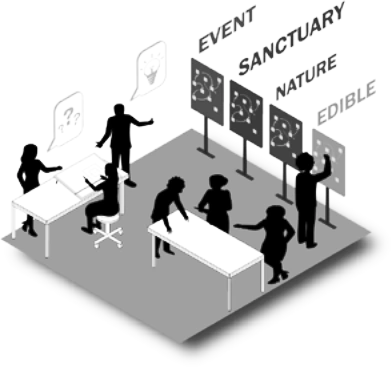
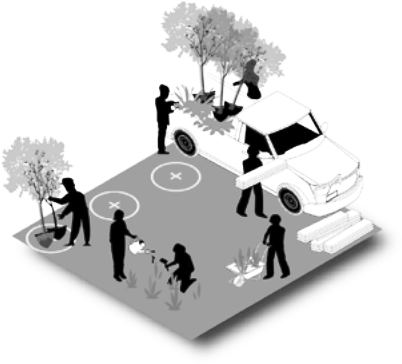
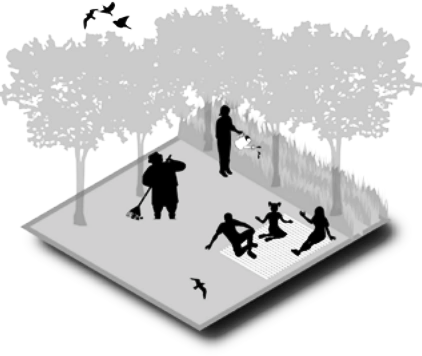
This Toolkit is a “do-it-yourself” instruction manual for community volunteers committed to bringing more nature into their neighborhoods. It doesn’t matter if the project is revitalizing a large vacant lot or a small patch of land in the front yard — this manual will guide you and your neighbors through the essential steps of visioning, designing, and building a neighborhood park.
The Park in a Truck system has two main components: this Toolkit and a series of Workbooks. The Toolkit gives you the big picture about the benefits of parks, background on the PiaT program, and a soup-to-nuts overview of a park project. Read through the entire toolkit before going to the workbooks, so you have a greater understanding of the whole park-building process.
The Park in a Truck story
Park in a Truck is an initiative of Thomas Jefferson University’s Landscape Architecture Program and Laboratory for Urban and Social Innovation (LUSI).
- Our vision: Cities where people create, build, and live in sustainable, equitable, healthy, and joyful communities.
- Our mission: Reimagining how cities’ social, ecological, and economic networks are designed, built, and maintained.
- The solution: A community-operated green network, established through low-cost, fast-turnaround renovations of vacant lots that improve environmental, social, and physical health in under-resourced neighborhoods, keep neighborhoods intact, and help residents lead revitalization and reinvestment efforts.
Building parks is an expensive and complicated undertaking often conducted without local engagement and support. PiaT takes a different approach:
- Community led. Local residents do all phases of the planning, implementation, and ongoing maintenance of their park. This process is not only park creation — but community creation.
- Customizable. Through the toolkit, local residents have all the information necessary for their new park.
- Engaging. PiaT gives young people an opportunity to direct their energies more positively.
- Cost-efficient. To keep costs down, communities select their desired components — chess tables, grilling areas, picnic tables, trees, flower beds, pathways for walking, playhouses, stages, a covered pavilion, logs to climb on, etc. — for simple installation. There are no expensive or specialized in-ground features or construction.
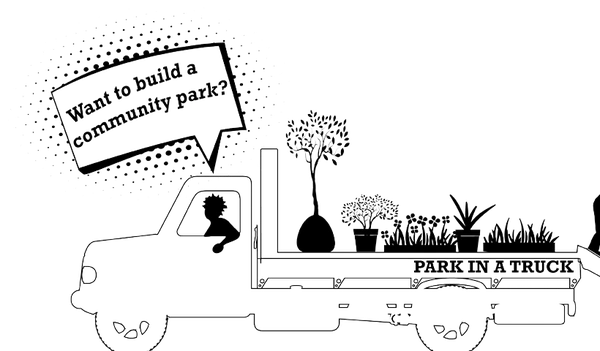
- Delivered to your door. All of the essentials are loaded on a truck and delivered to the site where community volunteers build their park — barn-raising style.
- Pay-it-forward. Success is contagious, and PiaT establishes a coalition of park-building veterans willing to pay it forward with those just beginning their park journey.
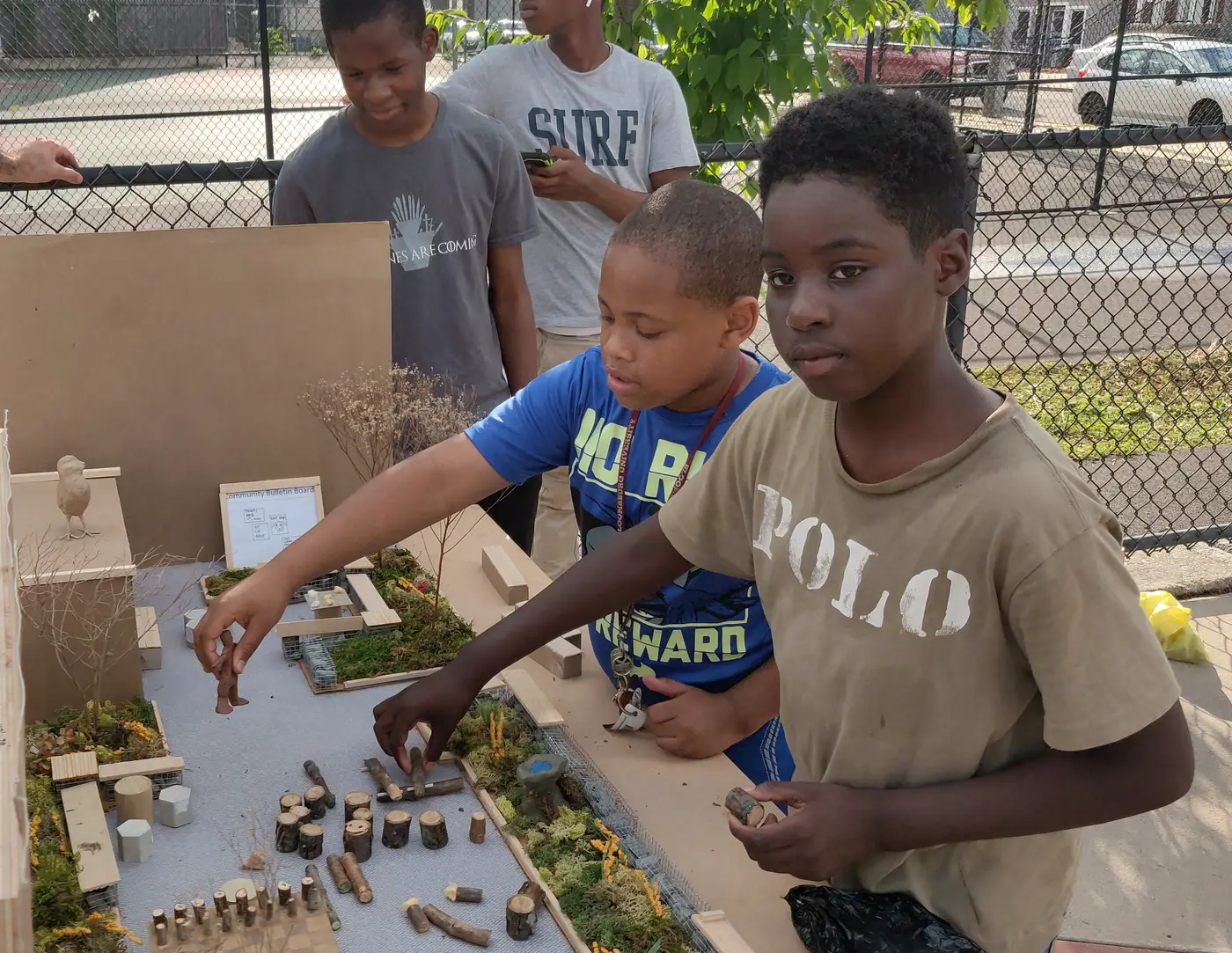
“Park in a truck allows communities to better themselves, and actually serves residents rather than displace them.”
— DeWayne Drummond, Mantua Civic Association
Guiding principles + goals
Re-imagining how social, ecological and economic networks in cities are designed, built and maintained. This is what we believe.
- Activate equity through participation and access — disrupt the status quo of unjust decision making, provide positive avenues for youth, create places for new and existing social connections, beautify areas and build community pride, create a neighborhood “hub” through events, activities, and impromptu meet-ups.
- Create educational opportunities for all — build leadership skills of high school students to be “park ambassadors,” encourage hands-on learning through community gardening and events, partner with local schools and educational organizations for classes and workshops, teach real-world construction skills for life and job training.
- Respect and build upon existing community strengths, resources, and networks — welcome diverse types of community events and activities, provide access to all persons, cultivate social inclusion, foster inter-generational participation, honor the history of the neighborhood and local culture.
- Stimulate the local economy — use locally-sourced, long-lasting and non-toxic materials, increase property values and stimulate local economies, activate under-utilized lots.
- Fight climate change — reduce urban heat island effects through tree plantings and increasing pollinator habitat, reduce stormwater/flooding impacts, create a network of parks to link islands of high-quality habitat, provide local opportunities to connect with nature, use low-maintenance, high wildlife value native plants, use organic strategies to eliminate chemical pesticides, collect and reuse rainwater.
- Promote health of communities — encourage physical activity, provide places to grow food and friendships that are shared within the community, nurture space for mental relaxation, joy and friendship, allow easy and safe access to outdoor environments, provide local opportunities to connect with nature.
Why a park?
Take a deep breath and imagine yourself in a garden or sitting beneath a leafy green tree rustling gently in the breeze. Birds are chirping, and you smell the sweet scent of spring flowers. Maybe you hear the sound of children giggling with excitement as they jump from rock to rock, or the quiet chatter of seniors gardening nearby. How do you feel?
We all know the joy and calm we feel when experiencing the natural world around us. So it should be no surprise scientific research confirms that simply living near a park makes you healthier, and spending time in a park — whether walking, biking, or just relaxing — boosts your psychological and physical well-being.
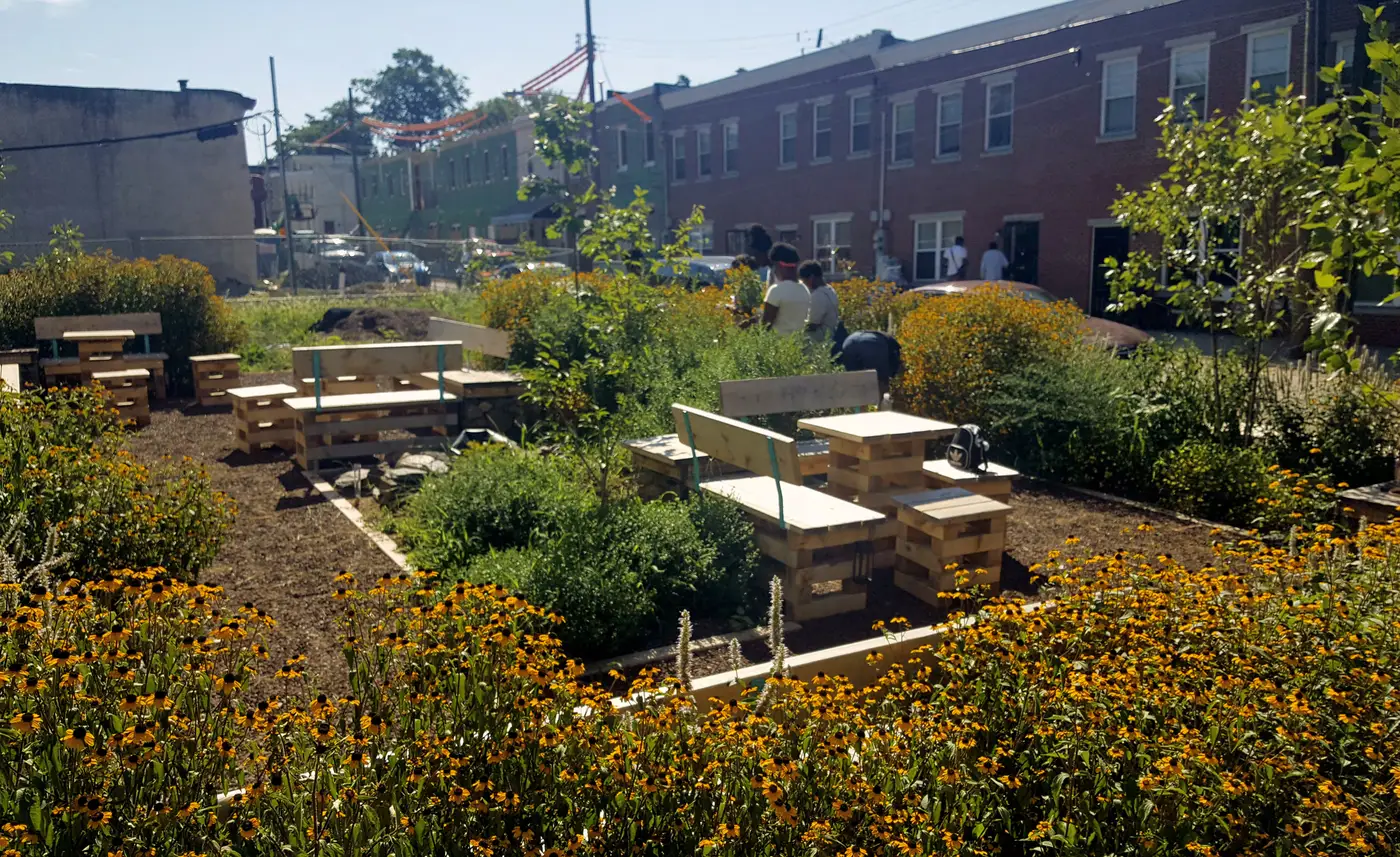
“Park in a Truck is a process that empowers communities to change their neighborhood one lot at a time.”
— PiaT Founder, Kim Douglas
On the next page are four different ways one can experience the benefit of neighborhood parks:
- Social benefits. Parks bring people out of their homes. They are convenient gathering places — to drink coffee or play chess or for organized neighborhood events: spaces to be safe, spaces to grow, resources to share, spaces to meet up. The very act of building their park helps bring a community together. To share. To heal. To celebrate.
- Economic benefits. A park can help stimulate the local economy. Parks can become pop-up markets where residents sell their crafts. Local businesses thrive when nearby parks attract visitors and customers: increased foot traffic, support for local artisans, mobile business support, energy cost reductions, CO₂ banking. Parks also enhance property values, attracting families looking for a less congested neighborhood with more green space and amenities.
- Ecological benefits. Green spaces of any size provide important environmental benefits. Small parks can provide valuable habitat for local and migrating wildlife and serve as important areas for pollinator species: cleaner air, nutrient cycling, wildlife habitat, increased biodiversity, rainwater infiltration. Green spaces are essential to absorbing water and decreasing urban flooding. All of these things help mitigate climate change.
- Health benefits. Exposure to green spaces boosts mental health and psychological well-being beyond the benefits of physical activity alone. Parks help reduce blood pressure, increase social well-being, and promote positive health behaviors: clean air, reduced temperature, increased exercise, improved comfort, reduced stress. The benefits for low-income families are even greater. A park a day helps keep the doctor away.
A network of parks
Clean air, clean water, and the protection of limited green spaces is critical to healthy urban neighborhoods. Unfortunately, many urban areas have a long history of pollution, poor surface water management and neglected open space, but lack the resources to remedy these problems. By tapping into residents’ desire to change their neighborhoods, communities can play an important role in the creation of healthy urban environments that bring nature back into our cities. The Park in a Truck initiative has many goals, but one of the most important is to help communities build sustainable natural urban oases.
When integrated as a city-wide green network, a Park in a Truck–designed park creates wildlife habitat corridors and islands of green that lower high outdoor temperatures caused by the “urban heat island” effect. Community-led green initiatives are an important way to help create biologically diverse and more widely accessible parks that will help with the transition to a more sustainable, low-carbon society.
PiaT enables communities to create, build and live in sustainable, equitable, healthy and joyful communities.
See the interactive map online, or the list of parks below.
What is a pollinator?
Pollination is important for a strong, healthy ecosystem. One in three bites of food you eat depends on pollinators. Apples, almonds, oranges, avocados, peaches, pears, plums, cherries, alfalfa, blueberries, vanilla, cranberries, tomatoes, kiwi, figs, coffee, strawberries, blackberries, raspberries, lemons, limes, eggplants, kumquats, nectarines, grapes, and cacao (chocolate) all depend on them.
Pollinators are an essential and vital part of the pollination process — the animals and insects who help distribute pollen to where it’s needed. Birds, bees, butterflies, bats and many other creatures are pollinators.
Pollination is an essential part of plant reproduction. Pollen from a flower’s anthers (the male part of the plant) rubs or drops onto a pollinator. The pollinator then takes this pollen to another flower, where the pollen sticks to the stigma (the female part). The fertilized flower later yields fruit and seeds.
Do you know why some bees buzz? Some plants, like tomatoes and blueberries, release their pollen through two tiny pores in each anther. Bees bite the anthers, hold tight, and buzz to shake the pollen out of the flowers.
Size doesn’t matter
Don’t get stuck on the idea that parks have to be big. Even the smallest patch of ground is a potential nature space — a place where birds, bees and other pollinators can find a delicious flower to do their thing. A 4×4 plot in the front yard or even a window box can provide many of the same benefits as a larger park. We call these Park Patches.
Park Patches are like home gardens…but more. They are part of a community- or city-wide park network that connects people and pollinators to improve the environment and everyone’s quality of life. Pollinators need food, water, cover…and each other. Park Patches are the beginning of something bigger.
Park Patches are a great way to literally get your hands dirty. Develop your skills and inspire your neighbors — build a Park Patch!
The six steps
So how does your community get a new park? One way might be to approach your councilperson and try to get the city to build you one. But that might take years of planning, and parks are expensive. Instead, what if a community could design and build its own park? That is precisely what the Park in a Truck Toolkit will allow you to do. Research has shown that community-led park building projects promote community pride, empowerment, and safety.
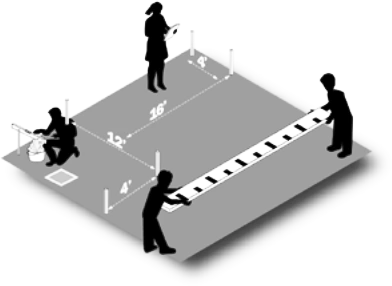
This book describes the key steps to build your park in six chapters: Acquire, Organize, Assess, Dream, Create, and Sustain. Each chapter gives you an overall understanding of the step. Then, when you’re ready to get going, go to that chapter’s workbook to dive into the details.
Legal notice
The recommendations in this toolkit are based on standard practices of fabrication and construction. Thomas Jefferson University, its Lab for Social Innovation, Park in a Truck, and their faculty, staff and affiliates make no warranties about the accuracy, likely results, or reliability of these recommendations, and are not liable for damages or injury to person or property arising from their use. Using these recommendations means you accept this. The full legal notice is in Resources.
This toolkit is a working document — a work in progress, one of several versions that will be published. Something is learned with every community meeting, every trip to the hardware store, and every park built. Please share your thoughts, questions, or ideas: ParkinaTruck@jefferson.edu.